Clusters
Clusters in Fransys represent the infrastructure where your applications run. They consist of multiple machines (called nodes) that work together to distribute workloads. Rather than handling each machine individually, Kubernetes steps in to orchestrate them, making sure resources are shared and balanced across the cluster.
What Is a Cluster?
A Kubernetes cluster is essentially a collection of nodes managed as one unit. Kubernetes handles how apps are scheduled and distributed, providing resilience, load balancing, and scaling across these machines—all while you focus on your app.
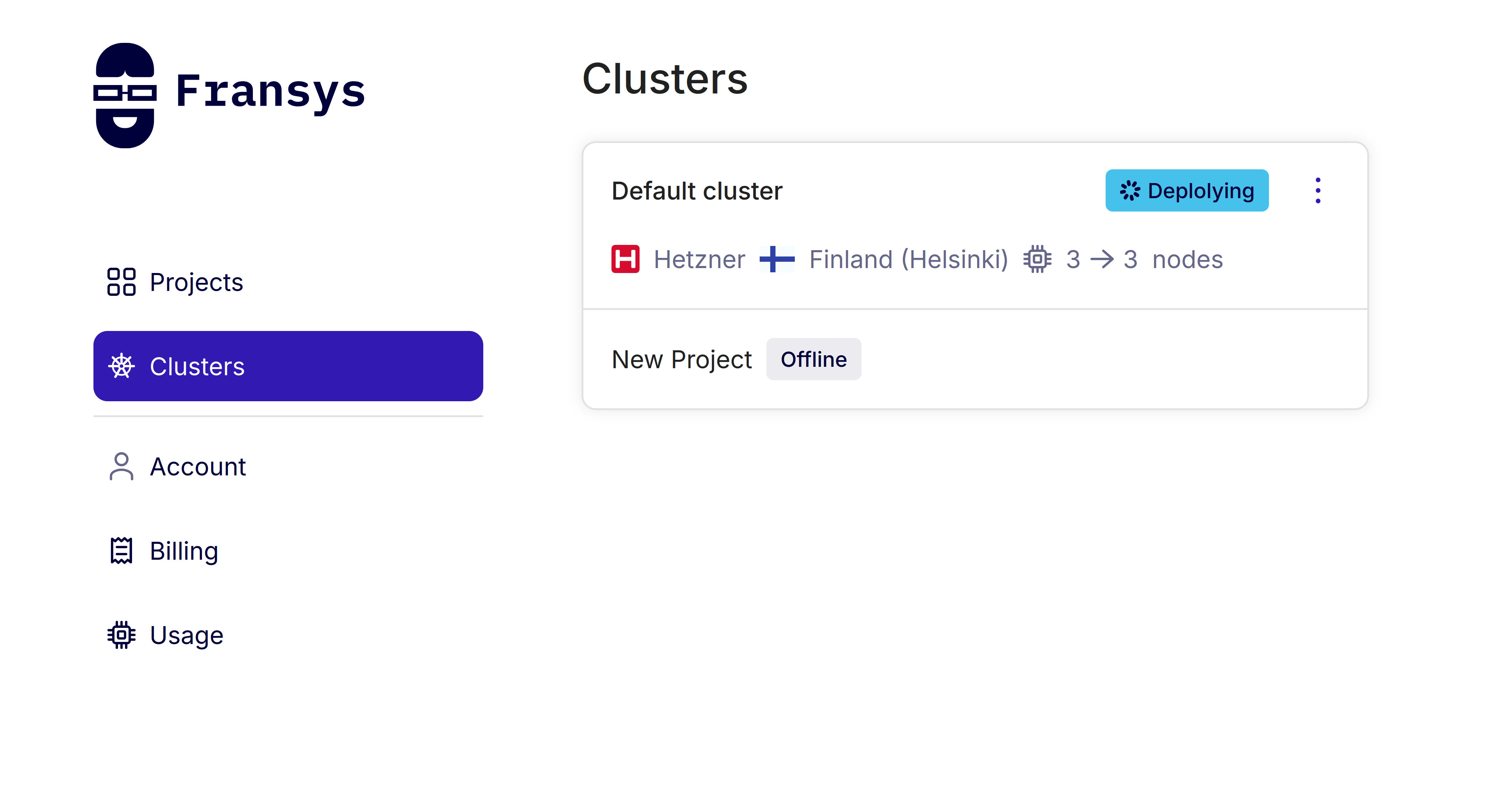
Clusters in Fransys
In Fransys, you don’t need to manage Kubernetes directly. Instead, you define your cluster’s:
- Provider: Choose your prefered cloud provider.
- Location: Pick a geographic region that aligns with your users’ needs.
- Composition: Decide the number and type of machines that make up your cluster influencing both performance and cost, or let us do it for you.### Scaling Options

Fransys now offers three ways to right-size your clusters:
-
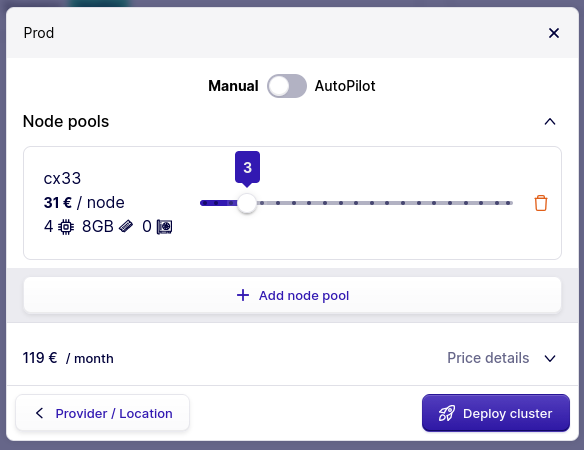
Manual scaling: Choose a fixed composition and number of nodes yourself.
-
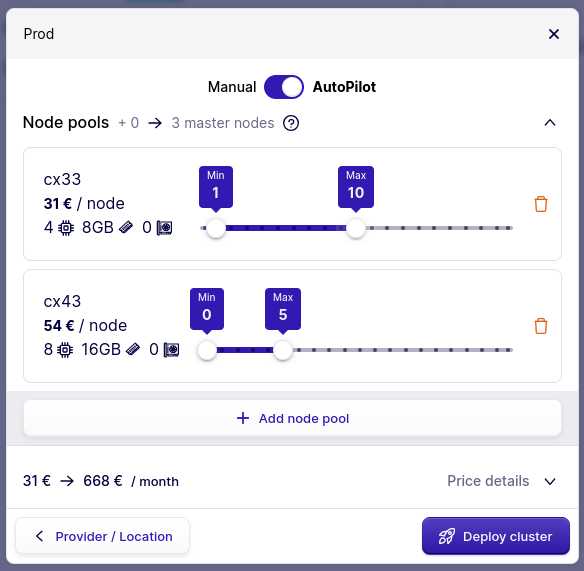
Autoscaling: Set minimum and maximum node counts, and typologies.
Fransys will automatically grow or shrink the cluster based on live workload signals. This keeps performance consistent while controlling costs.
-
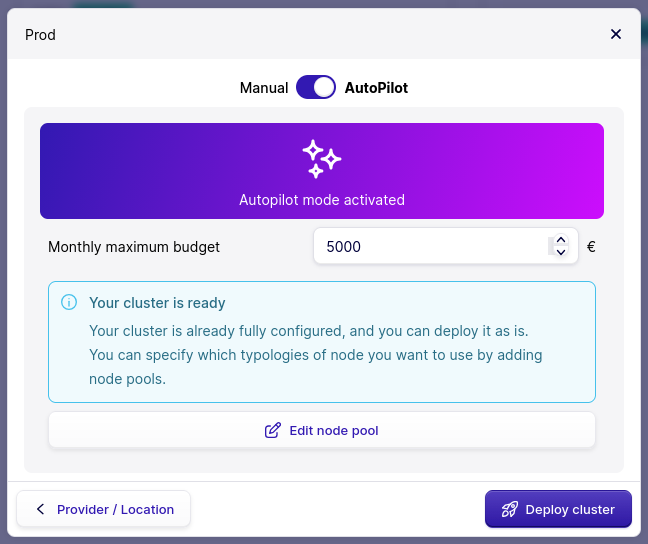
Autopilot: Only se a budget and let Fransys manage the rest: node counts, machine sizes, and placement policies without any manual intervention. Autopilot continuously tunes the cluster to match demand, ideal when you want a fully managed experience.